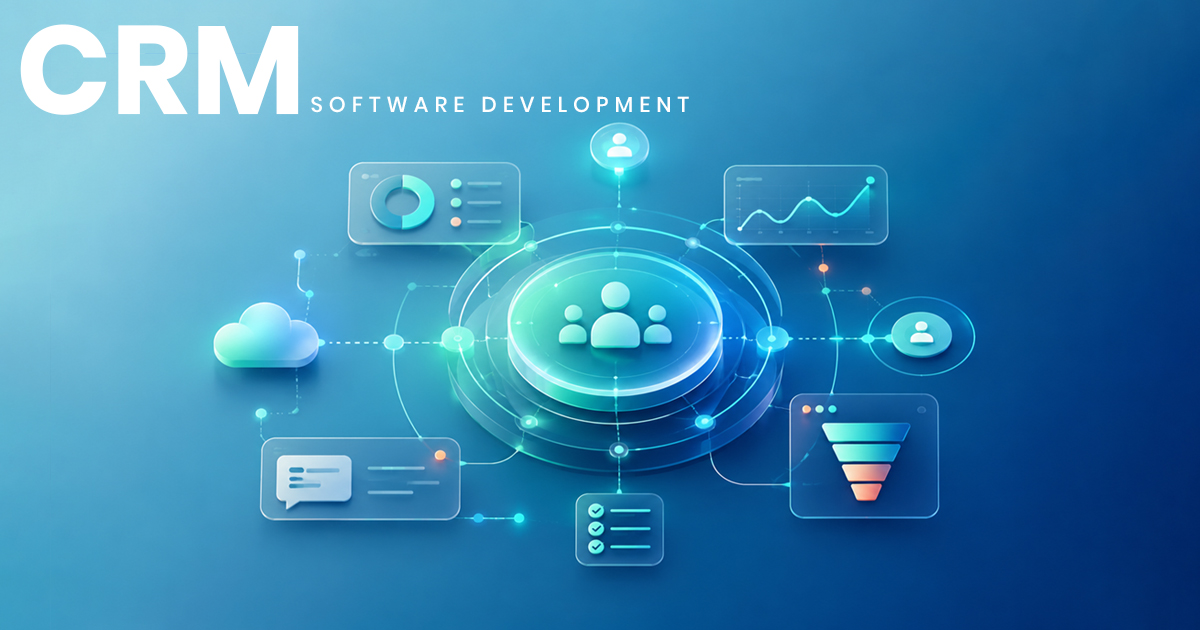
Customer relationships have evolved far beyond maintaining contact databases or recording sales activities. Today’s organizations expect CRM platforms to become intelligent business ecosystems that connect sales, marketing, customer support, operations, and analytics into a unified experience. As customer expectations continue to rise, CRM software development is entering a new era focused on automation, predictive intelligence, seamless integration, and personalized engagement.
Businesses investing in CRM software development today are no longer looking for software that simply stores customer information. They want platforms capable of identifying opportunities, forecasting customer behavior, automating repetitive work, and providing actionable insights in real time.
As digital transformation accelerates across industries, several emerging trends are defining the next generation of CRM solutions.
AI-Powered Customer Intelligence Is Becoming the Standard
Artificial Intelligence has shifted from being an optional enhancement to becoming a core component of CRM software development.
Modern CRM platforms are designed to continuously analyze customer interactions across multiple touchpoints, enabling businesses to understand purchasing behavior, engagement patterns, and future buying intent.
Instead of relying on manual reports, AI-powered CRM systems automatically identify:
- High-value prospects
- Customers likely to churn
- Upselling opportunities
- Personalized communication timing
- Sales forecasting accuracy
- Customer lifetime value predictions
This allows sales and customer success teams to spend less time analyzing data and more time building meaningful customer relationships.
The future of CRM development is centered around intelligent recommendations rather than static dashboards.
Hyper-Personalization Through Unified Customer Data
Modern consumers interact with businesses through websites, mobile apps, social platforms, email campaigns, support channels, and offline interactions.
CRM software development is increasingly focused on creating a unified customer profile by bringing all these interactions into one centralized platform.
A complete customer view enables organizations to deliver:
- Personalized product recommendations
- Customized marketing campaigns
- Context-aware customer support
- Individualized sales conversations
- Loyalty program optimization
Rather than treating customers as segmented groups, modern CRM platforms are evolving toward individualized experiences driven by real-time behavioral data.
Workflow Automation Is Eliminating Manual Operations
Businesses are placing greater emphasis on operational efficiency.
CRM software development now prioritizes intelligent workflow automation that reduces repetitive administrative tasks.
Automation is expanding across functions such as:
- Lead assignment
- Sales follow-ups
- Customer onboarding
- Approval workflows
- Support ticket routing
- Contract management
- Renewal reminders
- Marketing campaign execution
As automation capabilities improve, employees can focus on strategic activities while routine processes execute automatically behind the scenes.
This not only improves productivity but also minimizes human error throughout the customer lifecycle.
Industry-Specific CRM Development Is Growing Rapidly
Generic CRM platforms are gradually being replaced by industry-focused solutions that align with unique operational requirements.
Businesses increasingly prefer CRM systems designed around their specific workflows rather than adapting existing software to fit their operations.
Examples include CRM solutions for:
- Healthcare organizations
- Manufacturing companies
- Educational institutions
- Financial services
- Real estate businesses
- Logistics providers
- Professional consulting firms
- Retail enterprises
Industry-specific CRM software development enables organizations to incorporate specialized workflows, compliance requirements, reporting formats, and customer journeys directly into the platform.
Embedded Analytics Are Driving Faster Business Decisions
Traditional reporting often required exporting data into separate analytics tools.
Today’s CRM development integrates advanced analytics directly within business workflows.
Interactive dashboards now provide instant visibility into:
- Revenue performance
- Sales pipeline health
- Customer engagement metrics
- Marketing ROI
- Customer acquisition cost
- Support response performance
- Conversion trends
- Team productivity
Decision-makers can monitor business performance continuously instead of waiting for scheduled reports.
Real-time visualization enables faster strategic adjustments as market conditions change.
API-First CRM Architecture Is Becoming Essential
Organizations use multiple business applications simultaneously.
CRM software development increasingly follows an API-first architecture that allows seamless integration with external platforms.
Businesses expect CRM systems to connect with:
- ERP software
- Marketing automation platforms
- Communication tools
- Accounting systems
- E-commerce platforms
- Customer service applications
- Document management systems
- Business intelligence tools
An API-first approach ensures data flows securely across departments without duplication, reducing operational silos while improving overall efficiency.
Mobile CRM Is Supporting Hybrid Workforces
Sales professionals, consultants, technicians, and executives rarely work exclusively from office environments.
CRM software development now emphasizes mobile-first experiences that enable employees to manage customer interactions from anywhere.
Key mobile CRM capabilities include:
- Instant customer lookup
- Meeting updates
- Voice notes
- GPS-enabled visit tracking
- Offline data synchronization
- Mobile approvals
- Real-time notifications
- Digital document sharing
As remote and hybrid work models continue expanding, mobile CRM functionality has become a business necessity rather than a convenience.
Customer Data Privacy Is Influencing CRM Architecture
Data privacy regulations continue evolving globally.
CRM software development now places greater emphasis on secure architecture and responsible customer data management.
Modern CRM systems increasingly include:
- Granular user permissions
- Role-based access control
- Encryption at rest and in transit
- Consent management
- Data retention policies
- Audit logging
- Secure authentication
- Compliance reporting
Organizations are recognizing that customer trust depends on transparent and secure data practices.
Future CRM solutions will continue strengthening privacy controls while maintaining usability.
Predictive CRM Is Supporting Revenue Growth
Predictive analytics has become one of the fastest-growing areas of CRM software development.
Instead of reacting to customer behavior after it occurs, predictive CRM helps businesses anticipate future outcomes.
Advanced predictive capabilities include:
- Opportunity scoring
- Purchase likelihood analysis
- Customer retention forecasting
- Revenue prediction
- Seasonal demand estimation
- Customer engagement forecasting
These insights allow organizations to make proactive business decisions that improve sales performance and customer satisfaction simultaneously.
Low-Code Customization Is Accelerating CRM Innovation
Business requirements change rapidly.
CRM platforms increasingly support low-code development environments that allow organizations to modify workflows without extensive programming.
Low-code CRM customization enables businesses to:
- Build new workflows
- Customize dashboards
- Create approval processes
- Develop automation rules
- Configure forms
- Design reports
- Integrate external services
This flexibility shortens implementation cycles while enabling continuous platform improvements as business needs evolve.
Conversational CRM Is Enhancing Customer Engagement
Customer communication is becoming more conversational and immediate.
CRM software development is incorporating conversational interfaces that improve engagement while reducing response times.
Modern conversational CRM includes:
- AI-powered virtual assistants
- Live chat integration
- Smart routing
- Automated customer responses
- Voice-enabled interactions
- Omnichannel messaging
- Context-aware conversations
Rather than switching between communication platforms, customer interactions remain centralized inside the CRM environment, creating a consistent experience across every touchpoint.
Future CRM Development Will Focus on Connected Business Ecosystems
The next generation of CRM software will extend beyond customer management.
Future-ready CRM platforms are expected to become intelligent business hubs connecting operations, finance, marketing, sales, customer success, procurement, and executive decision-making.
Emerging technologies such as generative AI, advanced machine learning, intelligent automation, predictive analytics, and connected business ecosystems will continue shaping CRM software development over the coming years.
Organizations that invest in scalable, secure, and intelligent CRM solutions today will be better positioned to adapt to changing customer expectations while maintaining operational efficiency.
CRM is no longer simply a software application, it is becoming the digital foundation for customer-centric business growth. By embracing AI-driven intelligence, automation, mobile accessibility, advanced analytics, secure architecture, and seamless integrations, businesses can create stronger customer relationships, accelerate decision-making, and build sustainable competitive advantages in an increasingly digital marketplace.
As CRM software development continues to evolve, organizations that prioritize innovation, flexibility, and customer experience will be best equipped to thrive in the future of digital business.