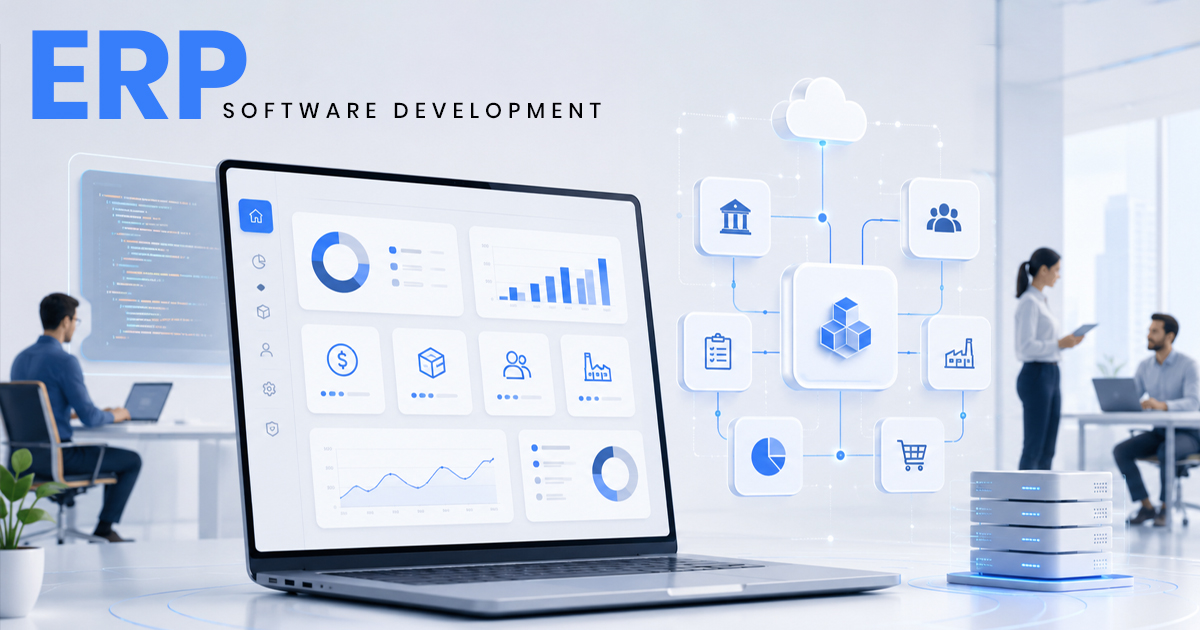
Digital transformation has moved far beyond adopting cloud software or digitizing paperwork. Modern organizations now expect every department to work together through connected systems that provide real-time visibility, intelligent automation, and faster decision-making. This shift has made ERP software development one of the most valuable investments for businesses looking to improve operational efficiency and prepare for future growth.
Today’s ERP platforms are no longer limited to finance or inventory management. They have evolved into intelligent business ecosystems capable of integrating departments, customers, suppliers, analytics, artificial intelligence, and automation into a single platform.
Organizations that develop customized ERP solutions gain greater flexibility, stronger security, and the ability to adapt their software as business requirements evolve.
Modern ERP Development Is Focused on Business Agility
Businesses today operate in rapidly changing markets where customer expectations, regulations, and technologies evolve continuously. Generic software often struggles to keep pace with these changes.
Custom ERP software development allows organizations to build systems around their workflows instead of forcing teams to adapt to predefined processes.
Modern ERP applications commonly include:
- Finance and Accounting
- Human Resources
- Procurement
- Inventory Management
- Warehouse Operations
- Sales Management
- CRM Integration
- Manufacturing Planning
- Project Management
- Asset Management
- Business Intelligence Dashboards
By connecting these departments, organizations eliminate information silos and create a unified operational environment.
Intelligent Automation Is Becoming the Core of ERP Systems
Businesses increasingly expect ERP platforms to automate repetitive activities rather than simply recording transactions.
Modern ERP software can automate:
- Invoice generation
- Purchase approvals
- Employee onboarding
- Inventory replenishment
- Production scheduling
- Vendor communication
- Customer follow-ups
- Compliance reporting
- Financial reconciliation
- Workflow notifications
Automation minimizes manual work while improving consistency across departments.
Employees spend more time solving business challenges instead of handling repetitive administrative tasks.
AI Is Reshaping ERP Software Development
Artificial Intelligence has become one of the biggest advancements in ERP development.
Rather than simply storing historical data, AI-enabled ERP platforms help businesses predict future outcomes and recommend actions.
Popular AI capabilities include:
Predictive Demand Forecasting
Machine learning analyzes historical sales, seasonal patterns, and purchasing trends to improve inventory planning.
Intelligent Reporting
Executives receive summarized business insights instead of manually reviewing hundreds of reports.
Automated Document Processing
AI extracts information from invoices, purchase orders, receipts, and contracts with minimal human intervention.
Smart Resource Allocation
ERP systems recommend optimal workforce distribution based on workloads and project timelines.
Business Risk Detection
AI identifies unusual spending, inventory anomalies, delayed payments, or operational bottlenecks before they become costly problems.
These capabilities transform ERP software into an intelligent business assistant rather than a simple management system.
Cloud-Based ERP Continues to Lead Digital Transformation
Cloud technology has significantly changed ERP software development.
Businesses now expect solutions that can be accessed securely from offices, homes, manufacturing facilities, or while traveling.
Cloud ERP offers several operational advantages:
- Faster deployment
- Automatic updates
- Reduced infrastructure costs
- Improved disaster recovery
- Better scalability
- Secure remote access
- Easier collaboration
As organizations expand into multiple regions, cloud ERP provides consistent access without maintaining separate local servers.
Industry-Specific ERP Development Is Growing Rapidly
Modern businesses rarely look for one-size-fits-all software.
Instead, organizations prefer ERP platforms designed around their operational requirements.
Industry-focused ERP solutions often include specialized workflows for:
- Manufacturing
- Healthcare
- Construction
- Retail
- Logistics
- Education
- Financial Services
- Hospitality
- Agriculture
- Professional Services
Customized modules improve efficiency because they align with real-world business processes rather than requiring extensive workarounds.
Mobile ERP Is Supporting Distributed Workforces
Employees increasingly work across multiple locations, making mobile accessibility essential.
ERP software development now prioritizes responsive mobile applications that allow users to:
- Approve requests
- Monitor inventory
- Track deliveries
- View dashboards
- Manage projects
- Record attendance
- Access customer information
- Generate reports
Mobile ERP improves responsiveness while reducing operational delays.
Managers no longer need to wait until they return to the office to make important business decisions.
Data Security Remains a Critical Development Priority
ERP systems contain valuable business information, making cybersecurity a major consideration during software development.
Modern ERP platforms incorporate multiple security layers including:
- Role-based access control
- Multi-factor authentication
- Data encryption
- Secure API management
- Audit logging
- Backup automation
- Compliance monitoring
- Session management
Secure ERP architecture protects financial records, customer information, employee data, and intellectual property from unauthorized access.
API Integration Creates Connected Digital Ecosystems
Businesses rely on multiple software platforms rather than a single application.
Modern ERP software development emphasizes seamless integration through APIs.
ERP systems commonly connect with:
- Payment gateways
- Banking systems
- CRM platforms
- HR software
- E-commerce platforms
- Shipping providers
- Customer support systems
- Marketing automation platforms
- Analytics tools
- Document management systems
Integrated systems eliminate duplicate data entry while improving operational accuracy.
Low-Code Components Accelerate ERP Development
Development teams increasingly combine traditional coding with low-code tools to accelerate ERP implementation.
Low-code capabilities help organizations quickly create:
- Approval workflows
- Internal dashboards
- Data collection forms
- Employee portals
- Reporting interfaces
- Business process automation
This approach reduces development time while allowing organizations to adapt workflows without rebuilding entire applications.
Business Intelligence Is Becoming an Everyday ERP Feature
Organizations no longer want static reports delivered at the end of the month.
Modern ERP platforms provide real-time dashboards that display:
- Revenue performance
- Sales trends
- Inventory turnover
- Cash flow
- Production efficiency
- Customer activity
- Employee productivity
- Operational KPIs
Interactive dashboards enable faster strategic decisions based on current business performance rather than outdated reports.
Scalability Is Built Into Modern ERP Architecture
Businesses evolve over time, and ERP systems must support that growth.
Modern ERP software is designed using modular architecture that allows organizations to add new functionality without disrupting existing operations.
As businesses expand, they can introduce additional modules for:
- International operations
- Multi-currency transactions
- Multi-location inventory
- Advanced analytics
- AI services
- Customer portals
- Supplier portals
- Workflow automation
This flexibility ensures the ERP platform continues delivering value as operational requirements change.
Choosing the Right ERP Development Strategy
Successful ERP software development begins with understanding business objectives rather than selecting technology first.
Organizations should prioritize:
- Process mapping
- Department collaboration
- User experience
- Scalable architecture
- Cloud readiness
- Security planning
- Integration capabilities
- Performance optimization
- Future AI adoption
- Continuous improvement
ERP development should support long-term business transformation instead of simply replacing existing software.
Conclusion
ERP software development has become a strategic investment for organizations seeking greater efficiency, intelligent automation, and long-term scalability. As technologies such as artificial intelligence, cloud computing, predictive analytics, and workflow automation continue to evolve, businesses need ERP platforms that adapt alongside their growth.
A thoughtfully developed ERP solution connects departments, streamlines operations, strengthens data security, and delivers real-time business insights that support confident decision-making. By investing in scalable, customized ERP software, organizations can build a digital foundation that improves productivity today while remaining flexible enough to meet tomorrow’s business challenges.