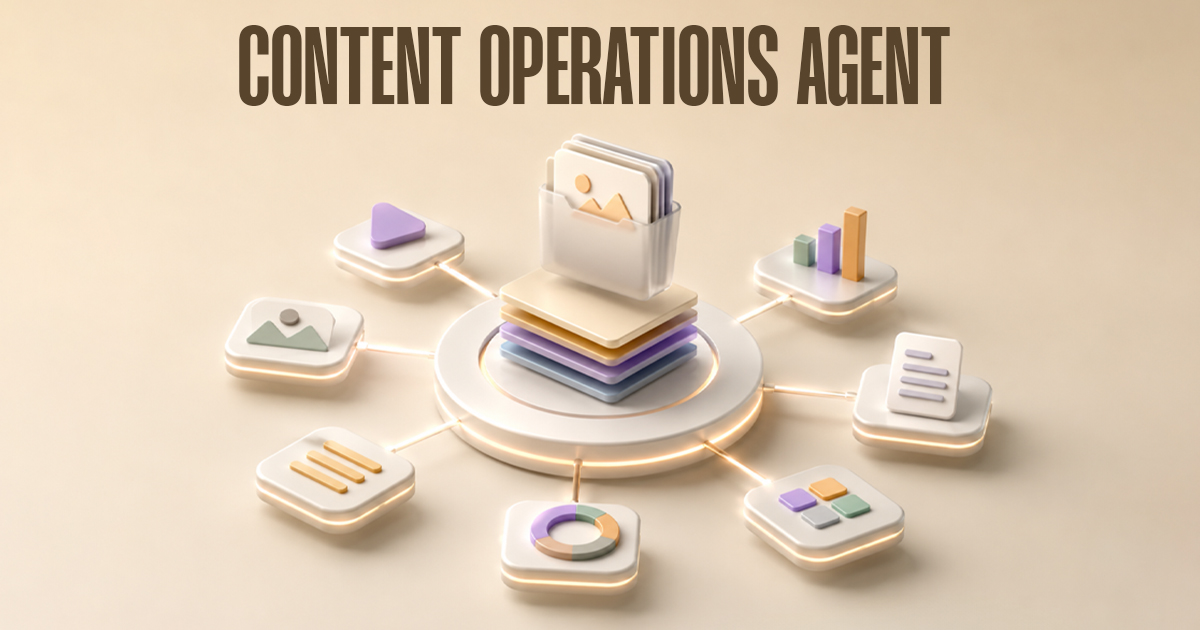
Content production has evolved beyond simply writing blog posts or publishing social media updates. Modern businesses manage hundreds—or even thousands—of content assets across websites, email campaigns, knowledge bases, product documentation, video platforms, and customer support channels. As the volume of digital content increases, so does the complexity of managing it efficiently.
This is where Content Operations Agents are becoming one of the most valuable AI-powered business solutions in 2026. Instead of replacing content creators, these intelligent agents orchestrate the entire content lifecycle—from planning and production to optimization and governance—ensuring teams deliver high-quality content faster while maintaining consistency and compliance.
Organizations adopting AI-powered content operations are reducing manual coordination, minimizing publishing delays, and creating scalable workflows that support business growth.
Content Operations Is Becoming an Operational Function
Many organizations still rely on disconnected tools, manual approvals, spreadsheets, and email chains to manage content production. These processes often create bottlenecks that slow marketing, product, and customer communication.
A Content Operations Agent connects these processes into a unified workflow by automating repetitive operational tasks while keeping stakeholders informed throughout every stage.
Instead of asking:
- Which article is awaiting approval?
- Which campaign missed its publishing date?
- Which product pages need updates?
- Which content is underperforming?
The AI agent continuously tracks every asset and provides actionable recommendations before problems affect business performance.
AI Coordinates Every Stage of the Content Lifecycle
Modern Content Operations Agents work across multiple stages simultaneously instead of focusing on only one task.
Strategic Content Planning
The agent analyzes business priorities, seasonal trends, product launches, and campaign schedules to generate structured editorial calendars.
It identifies:
- Upcoming content gaps
- Publishing frequency
- Priority topics
- Resource allocation
- Production timelines
This allows content teams to plan proactively instead of reacting to last-minute requests.
Workflow Automation
One of the largest productivity improvements comes from automating workflow management.
The AI agent automatically:
- Assigns content owners
- Creates production tasks
- Sends approval reminders
- Tracks revision history
- Monitors deadlines
- Escalates overdue projects
Instead of manually following up through meetings and emails, teams receive real-time workflow visibility.
Intelligent Content Reviews
Review cycles often consume more time than content creation itself.
A Content Operations Agent performs automated quality checks before human reviewers receive the document.
These checks may include:
- Grammar consistency
- Brand tone
- Internal linking
- SEO optimization
- Metadata validation
- Heading structure
- Readability improvements
- Duplicate content detection
Human editors can then focus on strategy and messaging rather than repetitive corrections.
Enterprise Content Governance Is Becoming More Important
As AI-generated content increases, governance has become a major priority.
Businesses need to ensure published content follows internal standards while maintaining legal and regulatory compliance.
Content Operations Agents help by automatically validating:
- Brand voice consistency
- Approved terminology
- Legal disclaimers
- Publishing permissions
- Version control
- Content ownership
- Approval history
- Document retention policies
This reduces operational risk while improving organizational consistency.
Cross-Team Collaboration Without Operational Delays
Content rarely belongs to one department anymore.
Marketing teams, product managers, developers, legal departments, sales teams, HR, and customer support frequently collaborate on the same assets.
Content Operations Agents provide centralized coordination by showing:
- Current project status
- Assigned contributors
- Pending approvals
- Latest document versions
- Publishing schedules
- Performance dashboards
Instead of searching across multiple systems, everyone works from the same operational view.
AI Supports Multi-Channel Publishing
Publishing no longer means uploading a blog.
Organizations distribute content through:
- Websites
- Landing pages
- Knowledge centers
- Customer portals
- Email campaigns
- Social media
- Product documentation
- Internal employee platforms
A Content Operations Agent prepares content for multiple publishing environments while maintaining formatting consistency and reducing manual work.
This significantly shortens campaign launch times.
Continuous SEO Operations Instead of One-Time Optimization
Search optimization is becoming an ongoing operational process rather than a one-time checklist.
Content Operations Agents continuously monitor:
- Metadata quality
- Internal linking opportunities
- Keyword coverage
- Broken content relationships
- Content freshness
- Publishing consistency
- Duplicate pages
- Search visibility trends
Instead of waiting for quarterly SEO audits, organizations receive continuous optimization recommendations.
AI Learns From Content Performance
One of the biggest advantages of Content Operations Agents is continuous learning.
The agent evaluates performance data to identify patterns across published content.
It can recognize:
- Topics generating higher engagement
- Formats producing better conversions
- Content publishing frequency
- Audience behavior
- Seasonal demand shifts
- High-performing content structures
These insights help organizations refine future content strategies using actual business performance rather than assumptions.
Supporting Large-Scale Content Libraries
Many enterprises manage thousands of digital assets accumulated over several years.
Without centralized management, outdated information spreads across multiple channels.
Content Operations Agents continuously monitor content libraries by identifying:
- Expired information
- Duplicate resources
- Missing metadata
- Broken internal references
- Obsolete documents
- Low-performing pages
Instead of manually reviewing every asset, businesses receive prioritized maintenance recommendations.
AI Improves Operational Transparency
Business leaders increasingly expect measurable operational visibility.
Content Operations Agents provide dashboards showing:
- Content production velocity
- Approval turnaround time
- Publishing accuracy
- Team workload distribution
- Content backlog
- Revision frequency
- Workflow bottlenecks
- Resource utilization
These operational insights help leadership make informed decisions about staffing, processes, and campaign planning.
Human Creativity Remains Central
Although automation is expanding rapidly, successful organizations are not replacing creative professionals.
Instead, Content Operations Agents eliminate repetitive operational work, allowing writers, editors, strategists, designers, and marketers to focus on:
- Storytelling
- Brand messaging
- Customer experience
- Creative campaigns
- Thought leadership
- Strategic planning
AI manages the operational complexity while humans continue driving creativity and innovation.
Emerging Trends Shaping Content Operations in 2026
Several developments are accelerating adoption across industries.
Autonomous Workflow Management
AI agents increasingly manage complete publishing pipelines with minimal human intervention.
Predictive Publishing
Machine learning predicts the best publishing schedules based on historical audience engagement.
Intelligent Content Maintenance
Rather than waiting for manual updates, AI proactively identifies content requiring revisions.
Cross-Platform Synchronization
Content changes automatically propagate across multiple digital channels while maintaining consistency.
AI Governance Frameworks
Organizations are implementing structured governance policies to ensure AI-generated content remains accurate, compliant, and aligned with business objectives.
Preparing for the Future of AI-Driven Content Operations
Content creation is only one component of modern digital operations. The greater challenge lies in coordinating planning, approvals, publishing, governance, optimization, and performance analysis at scale.
Content Operations Agents are transforming these complex workflows into intelligent, connected systems that reduce operational friction while improving quality, speed, and consistency.
As businesses continue expanding their digital presence, AI-powered content operations will become a foundational capability for organizations seeking to deliver reliable, high-quality content across every customer touchpoint. Companies that invest in intelligent content workflows today will be better positioned to manage growing content demands, respond quickly to market changes, and maintain a competitive digital presence in the years ahead.