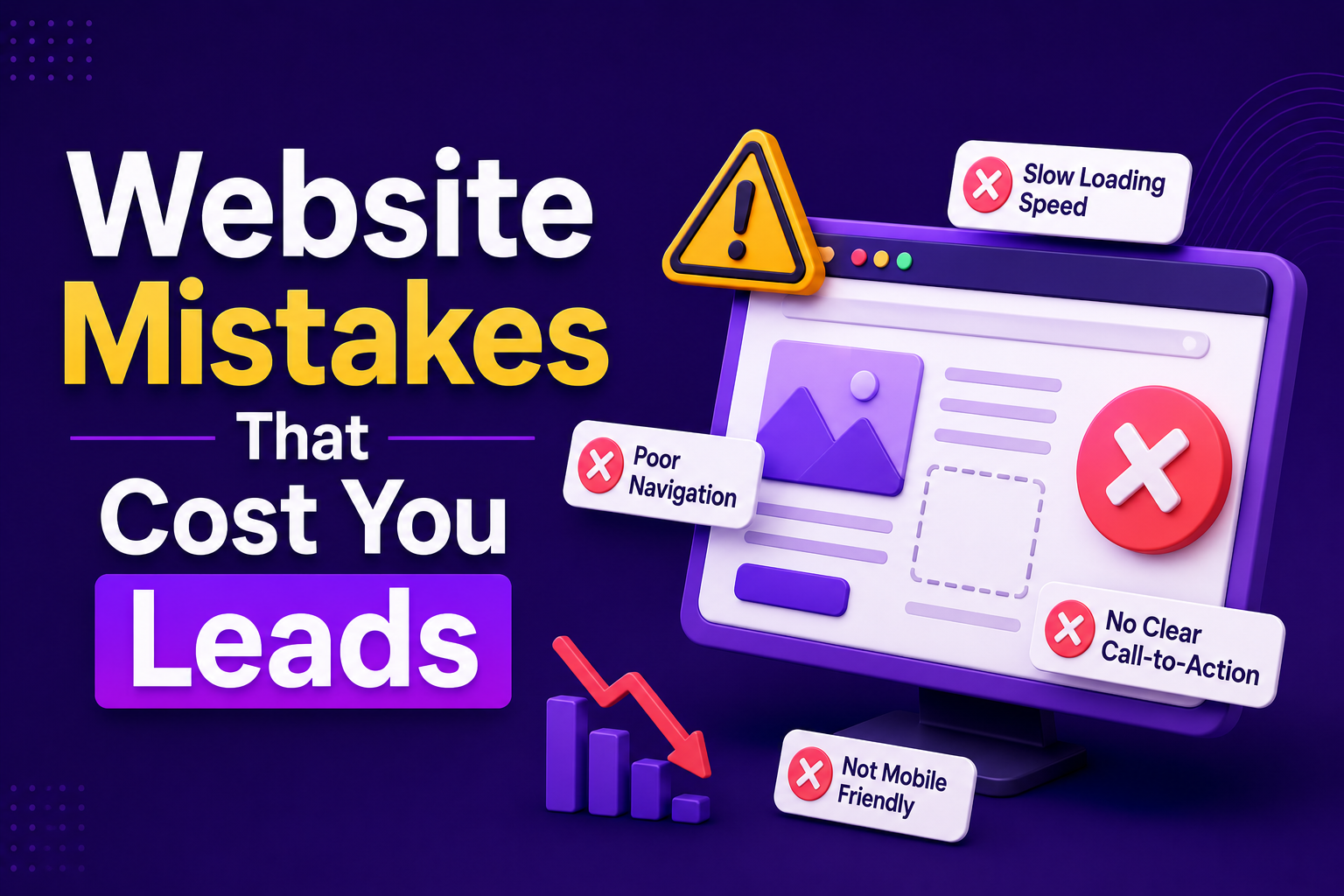
Your website is often the first interaction potential customers have with your business. While attracting visitors through SEO, social media, or paid advertising is important, converting those visitors into leads and customers depends heavily on website design and user experience.
Many businesses invest significantly in driving traffic but overlook critical website design issues that prevent visitors from taking action. A poorly designed website can increase bounce rates, reduce engagement, and negatively impact lead generation efforts. Even small design mistakes can create friction in the customer journey and result in lost business opportunities.
In 2026, users expect websites to be fast, intuitive, mobile-friendly, and trustworthy. Businesses that fail to meet these expectations risk losing potential customers to competitors with better online experiences.
This guide explores common website design mistakes that reduce leads and conversions and explains how businesses can optimize their websites for better performance and growth.
Why Website Design Directly Impacts Conversions
A website is more than a digital brochure. It serves as a sales and lead generation platform that influences how visitors perceive your business.
Effective website design helps:
- Build trust and credibility
- Improve user engagement
- Guide visitors toward conversions
- Support marketing campaigns
- Increase lead generation opportunities
- Enhance customer experience
When design elements create confusion or frustration, visitors are more likely to leave without taking action.
Slow Website Loading Speed
Website speed remains one of the most important factors affecting user experience.
Modern users expect pages to load quickly. Delays of even a few seconds can significantly impact engagement and conversion rates.
Common causes of slow websites include:
- Large image files
- Excessive scripts
- Poor hosting environments
- Unoptimized code
- Too many plugins
Fast-loading websites improve user satisfaction and encourage visitors to explore additional pages and complete desired actions.
Poor Mobile Experience
Mobile traffic continues to dominate online browsing behavior.
If a website is difficult to navigate on smartphones or tablets, businesses risk losing a substantial portion of potential customers.
Common mobile design issues include:
- Small text sizes
- Unresponsive layouts
- Difficult navigation
- Slow loading pages
- Poor button placement
A mobile-friendly website ensures a seamless experience across devices and improves overall conversion potential.
Unclear Calls-to-Action
Visitors should never have to guess what action to take next.
A common design mistake is failing to provide clear and visible calls-to-action (CTAs).
Effective CTAs should:
- Stand out visually
- Use action-oriented language
- Be strategically placed
- Align with user intent
- Guide visitors through the customer journey
Examples include:
- Request a Consultation
- Contact Our Team
- Get a Free Quote
- Schedule a Demo
Strong CTAs help transform website visitors into qualified leads.
Cluttered Page Layouts
Too much information on a single page can overwhelm users and reduce engagement.
Cluttered layouts often include:
- Excessive text
- Too many images
- Competing messages
- Multiple calls-to-action
- Distracting visual elements
Clean and organized layouts improve readability and help users focus on important information.
Simplicity often leads to better user experiences and higher conversion rates.
Complicated Navigation Menus
Website navigation should help visitors find information quickly and efficiently.
Complex menus create frustration and increase the likelihood of abandonment.
Best practices include:
- Simple menu structures
- Logical page organization
- Clear navigation labels
- Easy access to important pages
- Mobile-friendly navigation design
When users can easily find what they need, they are more likely to remain engaged and convert.
Weak Value Proposition
Visitors typically decide within seconds whether a website is relevant to their needs.
If the homepage fails to communicate value clearly, potential customers may leave immediately.
An effective value proposition should explain:
- What the business offers
- Who it serves
- What makes it unique
- Why customers should choose it
Clear messaging helps capture attention and encourages further exploration.
Lack of Trust Signals
Trust is essential for lead generation and conversions.
Visitors are more likely to contact businesses that demonstrate credibility.
Important trust-building elements include:
Customer Testimonials
Real experiences from satisfied customers.
Case Studies
Examples of successful project outcomes.
Industry Certifications
Professional credentials and qualifications.
Business Experience
Evidence of expertise and reliability.
Contact Information
Transparent and accessible communication channels.
Trust signals reduce uncertainty and improve conversion rates.
Poor Form Design
Lead generation forms play a critical role in conversion optimization.
Many businesses lose potential leads because forms are unnecessarily complex.
Common mistakes include:
- Too many required fields
- Confusing layouts
- Unclear instructions
- Poor mobile usability
Effective forms should collect essential information while minimizing effort for users.
Simpler forms often result in higher completion rates.
Ignoring Search Engine Optimization
A visually appealing website is not enough if users cannot find it.
SEO should be integrated into website design from the beginning.
Important SEO considerations include:
- Optimized page structure
- Fast loading speeds
- Mobile responsiveness
- Keyword-focused content
- Internal linking
- User-friendly URLs
SEO-friendly websites attract qualified traffic and support long-term lead generation efforts.
Inconsistent Branding
Consistency strengthens brand recognition and trust.
Inconsistent design elements can create confusion and reduce professionalism.
Businesses should maintain consistency across:
- Colors
- Typography
- Visual styles
- Messaging
- Logo usage
A cohesive brand experience reinforces credibility and improves customer perception.
Lack of Conversion Tracking
Without proper tracking, businesses cannot accurately measure website performance.
Important metrics include:
- Lead submissions
- Contact form completions
- Phone call inquiries
- Landing page conversions
- User engagement behavior
Tracking helps identify design issues, optimize user journeys, and improve conversion outcomes.
Data-driven improvements often produce significant business results.
Not Updating Website Content Regularly
Outdated content can negatively impact trust and user engagement.
Visitors expect accurate and current information.
Businesses should regularly update:
- Service pages
- Blog content
- Case studies
- Contact information
- Business updates
Fresh content signals professionalism and helps support SEO performance.
The Connection Between Design and Business Growth
Website design influences every stage of the customer journey.
A well-designed website can:
- Increase engagement
- Improve user experience
- Strengthen brand credibility
- Generate qualified leads
- Support marketing campaigns
- Drive revenue growth
Businesses that prioritize user-centered design often achieve better conversion rates and stronger long-term results.
Conclusion
Website design mistakes can significantly reduce leads, conversions, and overall marketing performance. Issues such as slow loading speeds, poor mobile experiences, unclear calls-to-action, and weak trust signals often create barriers that prevent visitors from becoming customers.
By focusing on usability, performance, clarity, and conversion optimization, businesses can create websites that effectively support growth objectives and deliver better customer experiences.
Working with an experienced website design company can help businesses identify design weaknesses, improve user engagement, and maximize lead generation opportunities. EON8 helps organizations develop high-performing websites that combine exceptional design with strategic conversion-focused functionality.